
We had our second webinar: "Teaching beyond the city: Rural planning pedagogy"!
You can view the webinar here: https://ucl.zoom.us/rec/share/BTvaoPAT-NAk4C_8S-NjyODMx4gT_jRtTv32Dea7ip4NmcCtKidYHlvIWEXK3w3-.ToRuwoJN4_-AzlwK
Teaching rural planning is rarely a requirement of professional planning bodies and, today, the teaching of rural planning is often neglected in the design of undergraduate and graduate programs in the planning field. At the same time, rural communities are facing rapid change, from housing pressures and infrastructure gaps to climate resilience and economic transition. How do we prepare the next generation of planners to meet these challenges thoughtfully and effectively?
This webinar placed ‘rural’ within planning education and explored approaches to teaching rural planning in universities and professional programs. Through a panel discussion, the webinar discussed how rural contexts differ from urban settings, and how the spatial context of ‘rurality’ may present different types of planning challenges.
These issues were explored through a roundtable discussion chaired by Mark Scott (University College Dublin), with Kathryn Frank (University of Florida), John Sturzaker (Royal Town Planning Institute), Aliye Ahu Gülümser (Istanbul Technical University) and Karen Ray (University College Cork). Critical questions in the panel discussion included:
- Is there a place for ‘rural’ on professional planning programs?
- What knowledge should the teaching of rural planning create?
- What rural planning knowledge should the next generation of planners develop?
- How does rural planning contribute to sustainable development pedagogy?
Whether you are a planning educator, practitioner, graduate student, or academic leader, this session offers practical insights, fresh perspectives, and collaborative ideas to strengthen rural planning education and better serve rural communities and sustainability challenges.
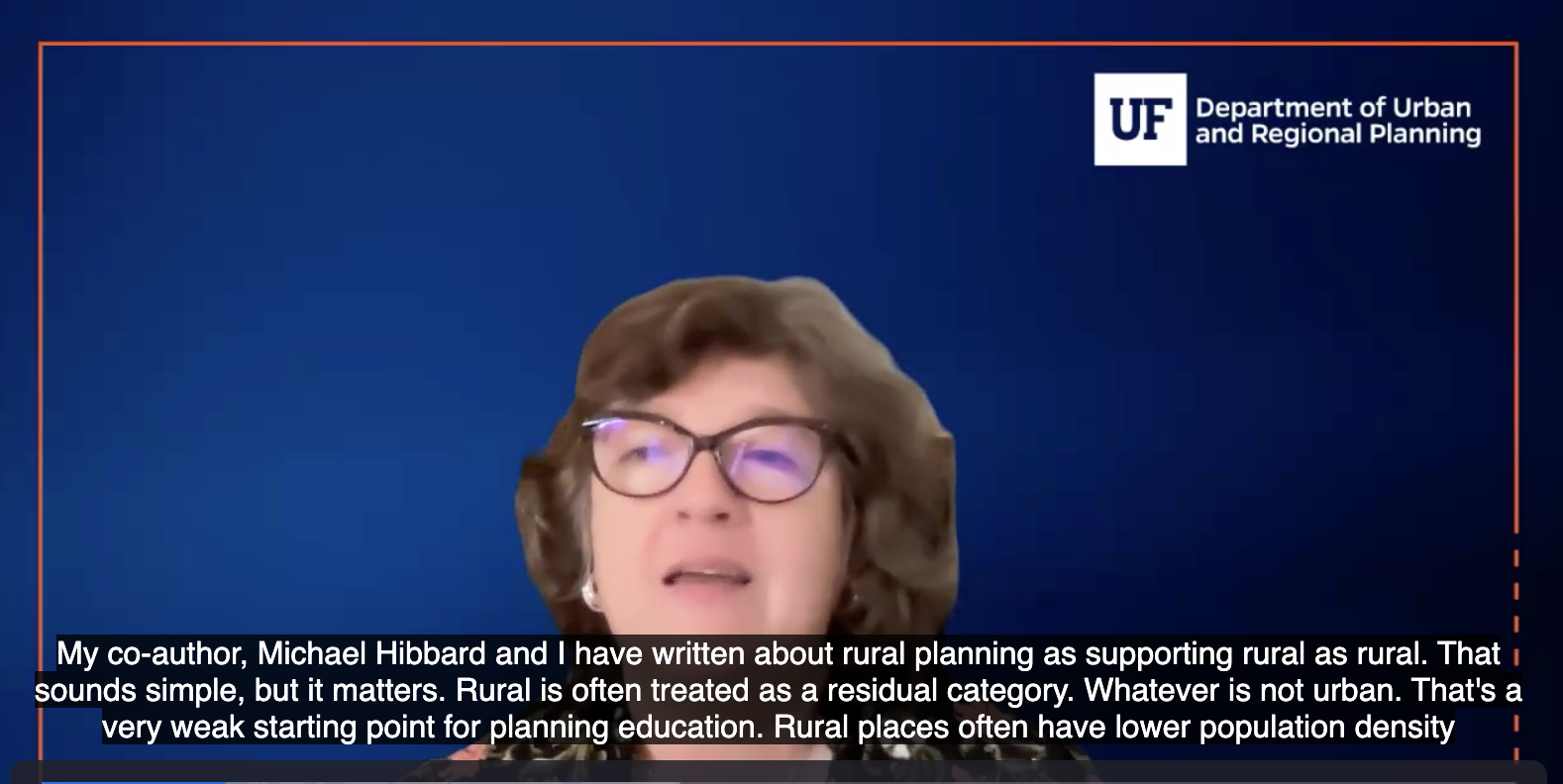
Dr Kathryn Frank: " ... Rural planning supporting rural as rural. That sounds simple, but it matters. Rural is often treated as a residual category. Whatever is not urban. That's a very weak starting point for planning education"
