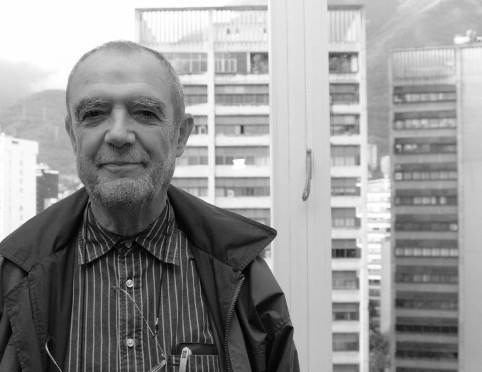
The AESOP community is deeply saddened by the passing of Giorgio Piccinato, one of the founding figures of our Association and its President from 1992 to 1994. His vision, intellectual generosity and enduring commitment played an important role in shaping AESOP and the development of planning education across Europe. We remember him with profound gratitude and extend our heartfelt condolences to his family, friends, colleagues and all those whose lives and work he influenced.
We are grateful to Professor Lucia Nucci for sharing the tribute that follows.
Changing windows upon the city: Giorgio Piccinato (1935-2026)
Lucia Nucci, Department of Architecture, Roma Tre University
It is with deep regret that we bid farewell to Giorgio Piccinato, a distinguished figure in the field of planning, a founding member and former President of AESOP (1992-1994). Giorgio passed away on Friday 28 August 2026, leaving a significant gap in the world of planning education and research. Together with Patsy Healey, Klaus Kunzmann, Andreas Faludi, Luigi Mazza and others, Giorgio Piccinato co-founded AESOP in 1987 and continued to support it to become the key institution for the promotion of planning in Europe and beyond. Giorgio Piccinato also took on the role of President of AESOP and led the organization with commitment and conviction during his term.
Emeritus Professor of urban planning in the Department of Architecture at Roma Tre University, IT, (2010) made significant contributions to the development and advancement of the study of the city, teaching, and the practice of urbanism.
He studied Architecture at the University of Rome La Sapienza (1960) where he met Manfredo Tafuri, Vieri Quilici, Lucio Barbera, and others. They took active part in the critical climate that challenged conventional architectural education. Travel was fundamental to his international dimension, knowing future colleagues and friends. He participated at the Harvard International Seminar (1963). He was a visiting scholar at MIT (1966), a research associate at Berkeley, University of California (1967), and later a senior fellow at Wayne State University. He was Head of the Department of Urban Studies, Roma Tre University and director of the PhD program Territorial policies and local project. He was Head of the Urban Planning Department at IUAV Venice and director of an inter-university doctorate in territorial urbanism together with the Polytechnic universities of Milan and Turin. Consultant to the United Nations regional urbanism programme, UNESCO, the European Union and the Slovenian Research Agency ARRS for programs dealing with urban and regional planning, urban conservation, professional education.
He has lectured in universities worldwide and published books and essays on the relationship between social change and the built environment. In the first book, "La costruzione dell'urbanistica. Germania 1871–1914", 1974 Piccinato realized that the city could not be separated from the institutions and social, economic, political forces that produced it.
His seminal books, including La costruzione dell'urbanistica. Germania 1870-1914 (The construction of planning. Germany 1870-1914), Rome 1974, Wiesbaden 1983 and Barcelona 1993; Città, territorio e politiche di piano in America Latina (City, territory and planning policies in Latin America), Milan 1991; Alla ricerca del centro storico (Looking for the historic centre), Milan 1996; Un mondo di città (A world of cities), Turin 2002 and Caracas 2007; Atlas de centros históricos do Brasil (Atlas of historic centres of Brazil), Rio de Janeiro 2007; Fermoimmagine. Studio sulla felicità urbana (A study of urban happiness), Macerata 2008, Il carretto dei gelati. Un’introduzione all’urbanistica RomaTrE-Press 2020, have influenced generations of planning researchers and practitioners.
He was a member of the Editorial Board of the Journals: Planning History (Oxford), Urbana (Caracas), Journal of Urban Design (Nottingham), Tria (Naples), Urbani Izziv (Ljubljana). He conceived, established, and directed U3 – UrbanisticaTre, an online platform for scholarly exchange that brings together contributions on architecture and urban planning, comprising: U3iQuaderni, le Rubriche di U3 and le NU3 – le Note di U3 (https://urbanisticatre.uniroma3.it/chi-siamo/)
After his formal retirement, he remained an active Emeritus Professor for the rest of his life, still writing, teaching, and contributing to all facets of university life. Generations of researchers knew him as a generous, rigorous and inspiring teacher, particularly for his ability to understand the city as the historical product of society, comparing experiences and territories, to rase questions and “to open new window” to interpret and improve the changing world.
Giorgio’s extensive professional and pedagogical experience leads me to regard his proposals for change as the most significant and demanding “passing of the baton” for the generation of designers and academics to which I belong.
To open new window
Does history help?
…Reading the present necessarily means re-reading the past. …how much are plans the result of the intelligence of designers, and how are they influenced by the available instruments of planning? If such intelligence is usually applied in all contexts of urban transformations in general, we should ask planning history to grasp its complexity, … overwhelmed by the supposed irrationality of the contemporary world, we have discovered interpretative dimensions that seem to provide the most appropriate reading….we have reviewed interpretation as a substitute for a reality that proves elusive; we accept recognizing the myth rather than placing our hopes in an always-insufficient rationality; and when reason fails to provide satisfactory explanation, we turn our attention to the role of desire. This allows us to deal with social movements otherwise inexplicable, from the occurrence of alternative practices to the occupation and appropriation of new collective spaces. Today we recognize, in some cases of intervention in the city, the role of the intention: there are projects, incomplete in themselves, which seem to be realized only through the active participation of users. Actually, incompleteness might be, in arts as well in public action, a way to let the path open, allowing other actors to come in and turn toward previously unthinkable results; recognizing the emotions might help to deepen our knowledge of a place or the reasons for the events….Would such ‘performative projects’ help the historian to understand the many facets of the contemporary city (and through it the city of the past)? …
Piccinato, G., How many histories: notes on the tradition of urban history and the reasons that force us to change – changing windows upon the city in Fischer, K.F., & Altrock, U. (Eds.). (2018). Windows Upon Planning History (1st ed.). Routledge. https://doi.org/10.4324/9781315547077
Justice, Democracy, Desire
…Among the general context of globalization, from which it is impossible to withdraw, and the thousands local contexts there is an infinite variety of urban situations. This is also the meaning of our work: to recognize disparities, to enlarge citizenship rights. We must draw a space of democracy, open meeting, innovation, emotion. In this sense it might be necessary to give back value to the mingling of arts, which more than any other element point to arouse emotion, and recognise that the right to beauty exists for all citizens. Democracy is built also on these values and, after all, this is what planning was always about…
Piccinato, G., Justice, Democracy, Desire in AESOP Silver Jubilee: AESOP Presidents Statements (2012). https://aesop-planning.eu/resources/news-archive/aesop/aesop-silver-jubilee-aesop-presidents-statements-2
Città del mondo
…Cities grow, decline, densify within their central areas, expand, and disperse across the territory by virtue of their connections with the outside world and as a consequence of transformations that occur in work organization, technological processes, and communication networks. Yet direct experience teaches us the plurality of histories and the substantial incomparability of the paths when one is willing, or able, to perceive them. It is precisely from these differences that similarities may ultimately emerge, allowing us, perhaps, to gain a deeper understanding of the territories of the future…
Piccinato G., (Eds.), (2009), Città del Mondo, Quaderni del Dipartimento di studi urbani (n. 1), Quodlibet Studio. Città e paesaggio.