


08/12/2025
By Christian Lamker (Groningen), Nils Björling (Gothenburg), Joanna Gregorowicz-Kipszak (Gothenburg)
The Dynamics of Panarchy: Sensing, Planning and Designing grounded local-regional transformations
23rd meeting of AESOP Thematic Group on Planning and Complexity
Non-hierarchical and mutual interaction, self-organization between actors, as well as structures and scales of transformation that follow. Around 40 researchers and practitioners from 7 countries met on 27 and 28 November 2025 in Gothenburg at Chalmers University of Technology for the 23rd meeting of the thematic group on Planning and Complexity within the Association of European Schools of Planning (AESOP). Key notes by Jon Norberg (Stockholm University) & Sara Brorström (University of Gothenburg) helped kick off discussions on complex adaptive systems, panarchy, organisation, and long-term failures and successes of planning. Jon Norbert talked about “The origin and science of panarchy: a complex adaptive systems perspective” at the start of the conference. Sara Broström reflected on “Multilevel planning and panarchy in the Gothenburg harbour area” before the whole group went out for an excursion guided by the City of Gothenburg to the harbour area, Lindholmen, and finished in the Lindholmen Science Park.
Thinking about complex systems, adaptive cycles, diversity, dependencies, and uncertainties, structured the two full days of presentations, discussions, conference dinner, and excursion. Six conference sessions and themes dealt with: 1. Rethinking Roles and Paradigms in Complex Spatial Transformations, 2. Flows, Networks, and Self-Organization in Spatial Systems, 3. Temporalities, Resilience, and Negotiation in Transitional Contexts, 4. Analytical Frameworks and Meta-Governance for Complex Futures, 5. Distributed Planning and Adaptive Governance in Transitional Contexts, and 6. Digital and Participatory Approaches to Spatial Complexity.
Four strong developments surfaced for the thematic group and beyond:
- First, the dedication for revisiting key concepts and positioning spatial planning proactively within complexity scholarship. Complexity theories, complex adaptive systems, non-linearity, emergence, and many more terms have moved into the vocabulary of planning theory and also attract and attach to planning practice. However, the open group makes traces loose and difficult to follow. Thus, we seized especially the knowledge of Ulysses Sengupta (Manchester School of Architecture) and Ward Rauws (University of Groningen) to summarise and revisit the history of key concepts and the group. It is now the time to also look further to what spatial planning with its distinct theoretical perspectives and practical challenges can bring back to further enrich complexity theory debates more widely.
- close links to local-regional planning practices. We witness a continuous interest and engagement by practitioners to engage within the thematic group and our discussions. It may get unnoticed in regular rewards and recognition schemes, but such open discussions across (perceived) theory-practice boundaries provide one of the most fertile grounds for mutual learning and future ideas.
- Third, the group has a long tradition of talking about and with complexity theories of cities, also connected to names like Juval Portugali and Michael Batty. More than previously, this meeting unveiled the need to complement the scope also with urban-rural linkages, peri-urban areas, and (seemingly) rural and peripheral areas at different scales. Transformations happen across scales and clear-cut categories, thus opening further avenues for using complexity theories.
- Fourth, international (comparative) research with perspectives from other continents and the Global South. Case studies, and to some degree also theories, have become more international. Context matters for spatial planning, and we witness how complexity starts bridging into multiple more diverse contexts like South Africa, India, Iran, or China.
The meeting also marks the 20th anniversary of the thematic group. Dating back to a first meeting in Vienna in 2005, we can even look at multiple generations of planning scholars engaging in one of the oldest thematic groups within AESOP. The group was founded, among others, by Nikos Karadimitriou (University College London) and Gert de Roo (University of Groningen), and has since then expanded. Examples are a complexity track at the annual AESOP Congress in 2009 and following.
Regular activities of the thematic group include workshops and conferences, online seminars, meetings, sessions, or tracks, during the annual AESOP Congress, and stretches to exchange visits and developing joint project ideas. Two special issues in the Journal of Architecture and in the Transactions of AESOP are upcoming in 2026 based on conferences in 2023 and 2024. Extended abstracts of the conference in Gothenburg will be published within the Chalmers reports series in the coming year and enable deeper insights into the versatility of active contributions.
Most importantly, the thematic group depends on the commitment and dedication of many members to support, share, and engage actively in their own fields, interests, locations, and capacities. The thematic group coordinators, Jenni Partanen and Christian Lamker, are open for discussion at any time. Further information about the thematic group is available online at https://aesop-planning.eu/tg-news/planning-and-complexity/the-dynamics-of-panarchy and via a dedicated LinkedIn Group at https://www.linkedin.com/groups/12735445.
Thanks to the local organising team at Chalmers University of Technology (Sweden), the research area Local-Regional Transformations, Nils Björling, Joanna Gregorowicz-Kipszak, Jorge Gil, Julia Fredriksson, Flavia Lopes, Roos Teeuwen, Marco Adelfio, everyone else who supported on site, and every visitor. The event was co-organised with the thematic group coordinators Jenni Partanen (Aalto University) & Christian Lamker (University of Groningen) and supported by the Association of European Schools of Planning (AESOP).
Stay connected and tuned for updates - and surprise others and yourself with your own engagement.
Photos
All photos by: Christian Lamker
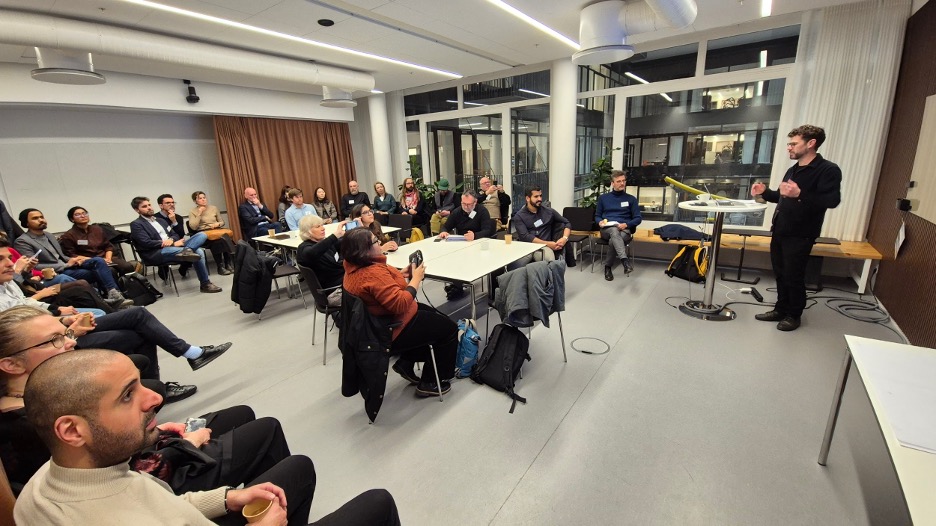
Workshop Discussions
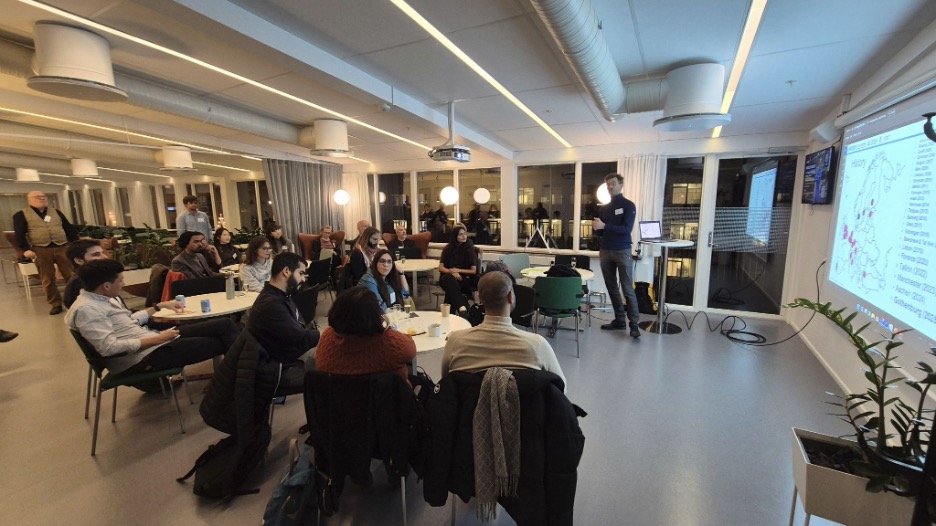
Reflections about 20 years Planning and Complexity
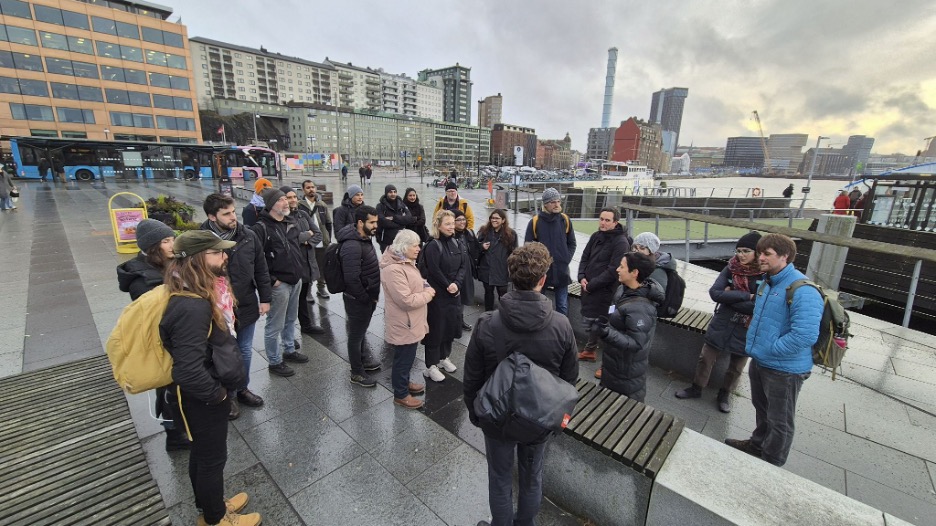
Excursion to the Harbour Area (Stenpieren)
