
PHD WORKSHOP MENTORS
The mentors for the AESOP PhD Workshop 2026 Drosendorf, Austria

Robin Chang
Robin A. Chang is a Postdoctoral Research Associate at the Chair of Planning Theory and Urban Development, Faculty of Architecture, RWTH Aachen University (DE). She was Visiting Assistant Professor at the Urban Studies Program of Simon Fraser University in Vancouver (CA) in 2024. Most recently, she was awarded a CMHC-SSHRC Housing Research Scholarship as a Postdoctoral Fellow with the Community Housing Canada Research Partnership based at the Faculty of Earth and Atmospheric Sciences at the University of Alberta (CA). As a trained environmental planner, she conducts community‐engaged research and teaching. Prior to her MSc and PhD at the Research Group of European Planning Cultures, Faculty of Spatial Planning at TU Dortmund University (DE), she practised planning in Canada. Her current work addresses the co-constitutional effects and interactions between built or lived environments as well as urban policies and planning through time‐sensitive concepts. The latter include futuring, rhythm/analysis, and the increasing penchant for responsive and accelerated development. She has served as a member of graduate-level examination as well as award committees in Canada, Germany, Norway, Belgium, and for the Urban Affairs Association. She is a member of the Alternative Urbanisms Research Collective based at UCL (UK) and Candidate Member of the Alberta Professional Planners Institute/Canadian Institute of Planners. Robin is also the first licensed trainer in Germany for the International Association for Public Participation (IAP2).
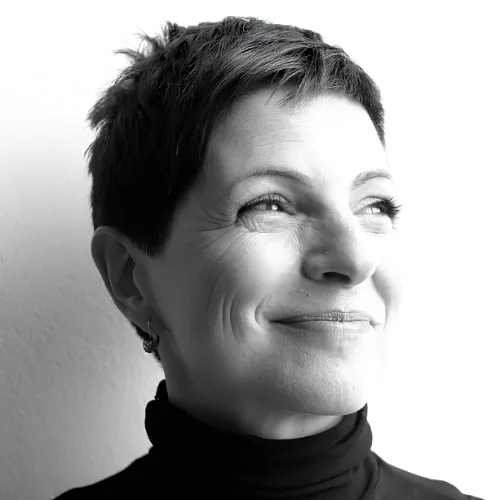
Tijana Dabovic
Tijana Dabović’s research focuses on spatial planning theory, planning education and land-use planning, with particular emphasis on geodesign. Geodesign is a collaborative approach to spatial planning which centres on complex, large-scale, long-term changes, using systems thinking across disciplines, scales, sectors, time horizons, and stakeholder groups, supported by dynamic models and simulations that provide feedback on the impacts and implications of proposed interventions. Geodesign, based on Steinitz's framework and as applied in her work, offers a strong contrast to current mainstream spatial planning practice in Serbia, which is heavily dominated by short-term, profit-driven projects led by a small number of politically connected actors, operating through opaque planning processes. Within this context, such approach in Serbia currently exists mainly in educational settings, where it functions as a radical alternative model for transparent, collaborative, and knowledge-based planning. Her expectation is that, as new generations gain expertise and new digital and analytical tools mature, these educational experiences can help build coalitions capable of pushing geodesign principles into mainstream planning once political and institutional conditions become more favourable. Professor Dabović has published her work in books and a variety of high-ranking international academic journals and has contributed to numerous scientific and professional projects at both national and international levels. She is the 2023-2026 Chair of the AESOP Excellence in Education Board.
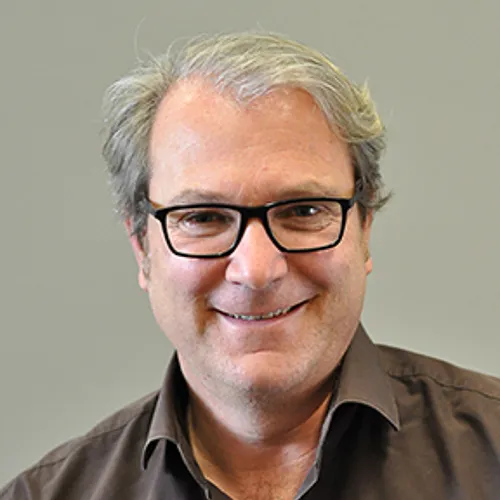
Alexander Hamedinger
Alexander Hamedinger is an urban sociologist and economist working as a Professor for urban and regional sociology at the TU Wien, Institute of Spatial Planning, Research Unit Sociology. Since 2014 he is ao.Univ. Prof. which he achieved through his habilitation in urban and regional sociology at TU Wien (title: ‘city regional governance, social cohesion and space’). Main topics of his research are currently urban, metropolitan and regional governance, spatial planning politics, sustainable urban development, socio-spatial inequalities in cities, participation in planning processes as well as action research. He has published to these topics internationally and is involved in different European networks of urban and regional research as well as spatial planning.
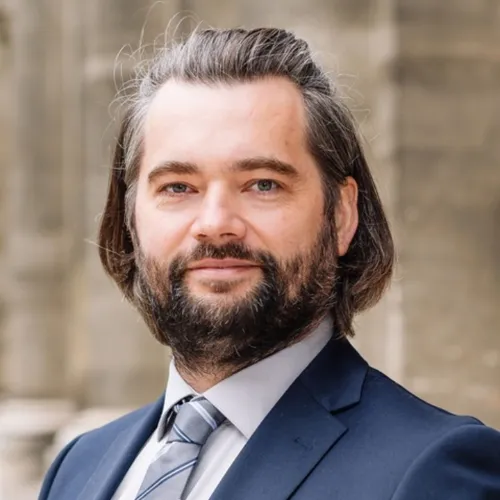
Alois Humer
Alois Humer is Professor of Regional Planning and Regional Development at the Faculty of Architecture and Planning at TU Wien and holds a PhD in Applied Geography, Regional Research and Regional Planning of the University of Vienna. Amongst others he has been an Interim Professor at TU Berlin (for Local and Regional Planning), a Group Leader at the Austrian Academy (for Sustainable Urban Regions) and a Visiting Fellow at Aalto University Finland (for Strategic Spatial Planning). His approach subsumes under “Governance and Strategic Planning for a Transformation of Society in Space” with a focus on at times conflicting demands of housing, health, education, economy, mobility, energy, ecology and such. Empirically, he focuses on regional scales as well as takes a European comparative perspective; with the ultimate aim of linking research, teaching and practice. For that, he is coordinating national and international project teams like in the Driving Urban Transition DUT Programme and collaborates in networks like AESOP, in which he is active as a Thematic Group co-coordinator of Transboundary Planning and Governance.
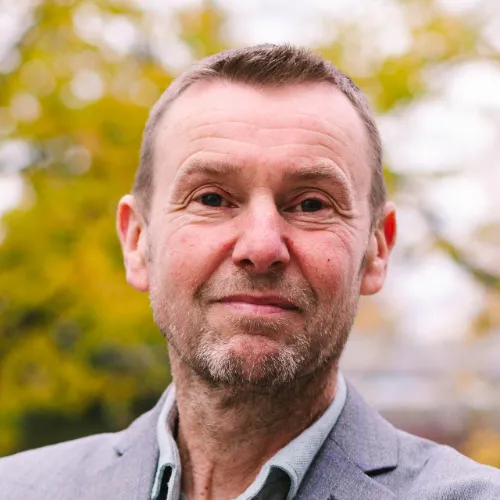
Dominic Stead
Dominic Stead is Professor of Land Use and Transport Planning, leader of the Spatial Planning and Transportation (SPT) research group and Director of the MSc programme in Spatial Planning and Transportation Engineering. Prior to joining Aalto University he was employed at Delft University of Technology between 2001 and 2020. Before then he was Research Fellow at University College London in the Bartlett School of Planning and Associate Lecturer at the University of the West of England in the School of Town and Country Planning. He began his academic career as a researcher at the University of the West of England. He has been visiting academic at the University of Queensland (2015) and guest professor at the University of Malta (2017), Friedrich-Alexander Universität (2015) and HafenCity Universität (2010).
Dominic Stead's research and teaching activities focus on issues of urban and regional governance and sustainability. He has a strong multidisciplinary background: a Doctorate in Planning Studies, a Masters degree in Environmental Science and a second Masters degree in Town and Country Planning. He has broad experience in teaching, both at undergraduate and postgraduate level, including courses on urban studies and urban and regional planning. He has extensive experience in acquiring, managing and executing research, especially international projects (with a total value of more than €20 million). He has managed large-scale research projects funded by NWO (Netherlands Organisation for Scientific Research), the European Commission and ESPON (European Observation Network for Territorial Development and Cohesion).
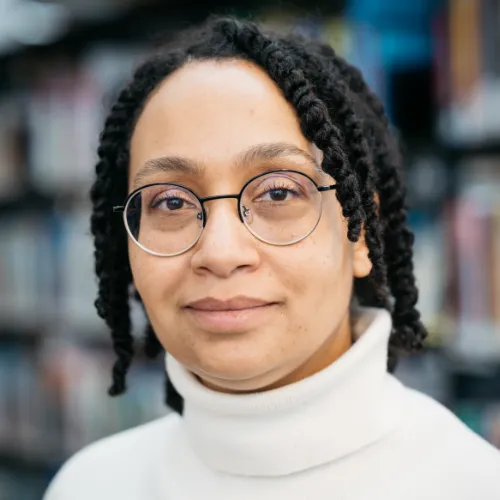
Renée Tribble
Prof. Dr. Renée Tribble heads the Chair of Urban Development, Urban Planning, and Urban Design Processes (urban design unit) at the Department of Spatial Planning at TU Dortmund University. Before she has been a visiting professor at the University of Kassel (2019-2021) and a professor of planning theory and methodology at TH OWL Detmold (2021). After studying architecture at Bauhaus University Weimar, she worked in various architecture and planning offices and taught at HafenCity University (HCU) Hamburg as a research assistant, where she received her PhD in 2021 on "Irritations and Reactions: Art and Planning". She is co-founder and shareholder of PlanBude Hamburg and projektbüro Hamburg. Her work focuses on the design, consultation and support of urban development processes, participatory and cooperative urban planning, process management and facilitation. She conducts research on urban practice, art, alternative neighbourhood and urban development, and cooperative planning processes.
.jpeg)
Daniel Galland
Daniel’s research and teaching focus on spatial planning and governance, with a particular interest in developing frameworks and concepts that explain the evolution of spatial planning systems, institutions, policies, and instruments, and their interaction with wider forces shaping the development of cities and regions. He has an interdisciplinary background, holding a PhD in Spatial Planning and Development (Denmark) and two Master’s degrees in Environmental Planning (Canada) and Ethics and Politics (Spain). During 2025-26, he has been an Affiliate Professor at the The Bartlett School of Planning, UCL (UK) and the School of Geography and Environment, Loughborough University (UK). Since 2020, he has been based at the Department of Sustainability and Planning at Aalborg University in Copenhagen. Prior to this, he worked at the Department of Urban and Regional Planning at the Norwegian University of Life Sciences. Throughout his academic career, Daniel has been committed to advancing planning education and pedagogy. In this capacity, he chaired the Excellence in Education Board (EEB) of Association of European Schools of Planning from 2017 to 2023, and led the development of AESOP’s Quality Recognition Programme, a collaborative initiative that supports member schools and contributes to continually enhance planning programmes across Europe.